
One in five consumers has an error on at least one of their credit reports, according to a study by the Federal Trade Commission. A single wrong late payment or a collection that is not yours can cost you points, a better interest rate or even an approval. The good news is that the Fair Credit Reporting Act (FCRA) gives you the right to dispute inaccurate information, and the credit bureaus are required to investigate.
Here is exactly how to do it.
Step 1: Get all three of your credit reports
Experian, Equifax and TransUnion each keep their own file on you, and they do not always match. An error can show up on one report and not the others, so always review all three. You can get free copies at annualcreditreport.com, or link your reports in a credit monitoring service so you can see them side by side.
Step 2: Go through every account line by line
Look for anything that is inaccurate, incomplete, outdated or that you do not recognize. Common errors include:
- Accounts that belong to someone else or came from identity theft
- Late payments reported on months you paid on time
- The same debt listed twice, often once by the original creditor and again by a collection agency
- Wrong balances, credit limits or account status
- Negative items older than the reporting time limit
- Wrong name, address or employer information
Step 3: Gather your proof
Supporting documents make your dispute stronger. Bank statements, payment confirmations, letters from the creditor or a police or FTC identity theft report all help show the bureau why the information is wrong.
Step 4: Write and send your dispute letter
You can dispute online, by phone or by mail. Many people prefer mail because it creates a paper trail. A good dispute letter includes:
- Your full name, address and date of birth
- A copy of your ID and proof of address
- Each item you are disputing, with the account name and number
- A short, clear explanation of why each item is wrong and what you want done (corrected or removed)
- Copies (never originals) of your supporting documents
Send each letter by certified mail with a return receipt so you can prove when the bureau received it. You can also dispute directly with the company that reported the information, called the furnisher.
Step 5: Wait for the investigation
Credit bureaus generally have 30 days to investigate after they receive your dispute, and up to 45 days in some cases, such as when you send additional information during the investigation. The bureau forwards your dispute to the furnisher, who must review it and report back. When the investigation is done, the bureau must send you the results in writing within 5 business days.
Step 6: Review the results and follow up
If the item is corrected or deleted, check your other two reports to make sure the change shows up everywhere. If the bureau verifies the item and you still believe it is wrong, you can send a new dispute with more evidence, dispute directly with the furnisher, add a brief statement to your file explaining your side, or file a complaint with the Consumer Financial Protection Bureau.
What you cannot dispute away
It is important to know that nobody can legally remove accurate, current and verifiable information from your credit report. Disputes are for errors. Accurate negative items will age off on their own once they reach the reporting time limit.
Let 800 Credit AI do the heavy lifting
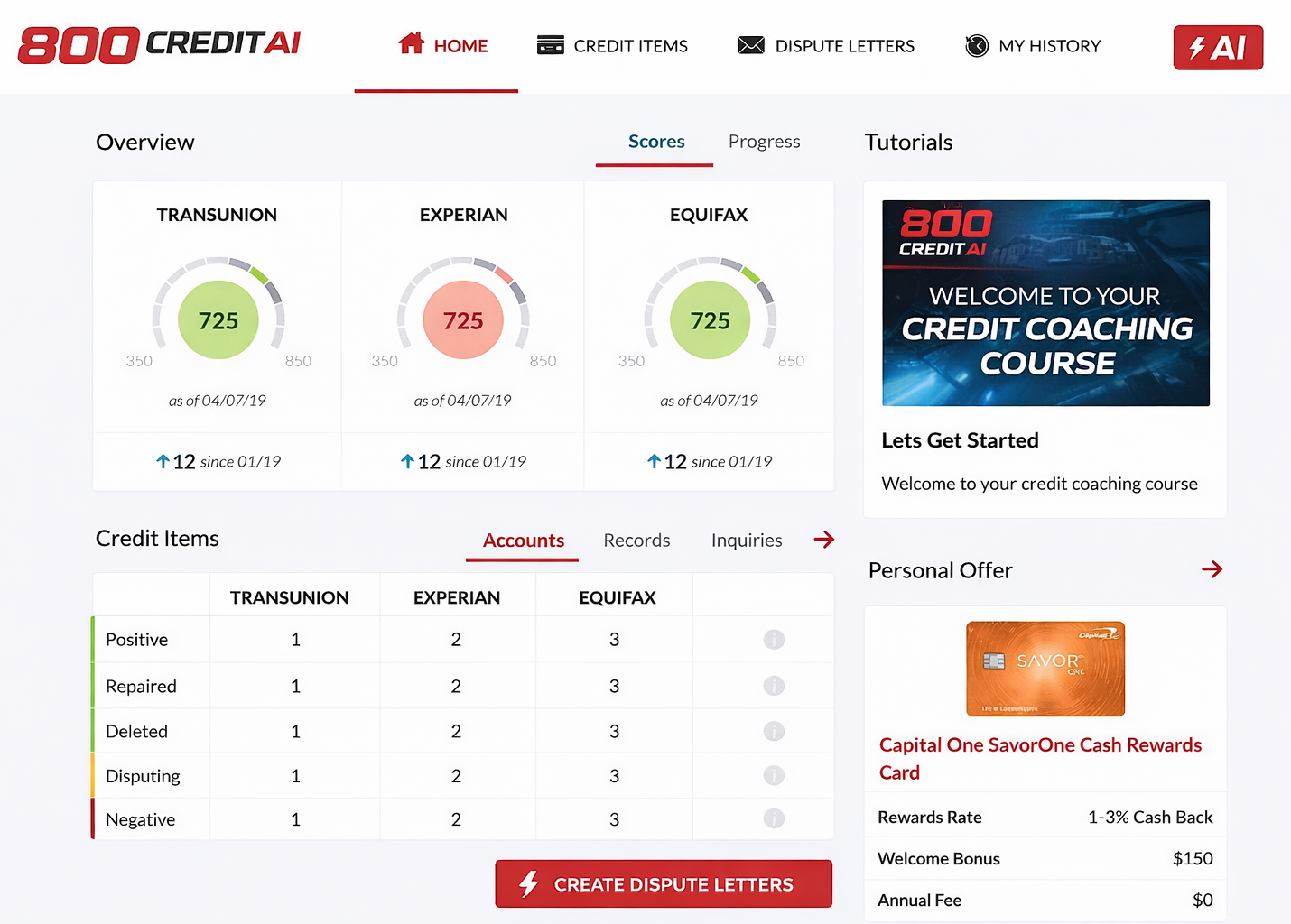
800 Credit AI pulls your reports from all three bureaus, flags the items worth disputing and builds your dispute letters in minutes, for one flat monthly price with no contracts. See how it works or get started today.
This article is for educational purposes and is not legal or financial advice. Results of any dispute vary and are not guaranteed.